What is carotid artery stenting?
The carotid arteries are the two large arteries on each side of your neck that supply your brain, neck and face with oxygenated blood. Sometimes plaque builds up in the arteries, which results in a condition called carotid artery stenosis (also known as carotid artery disease). Stenosis means that the space inside the artery has narrowed, restricting blood flow.
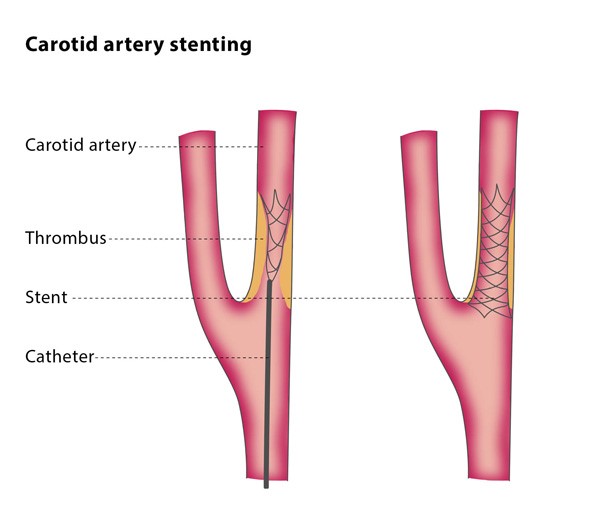
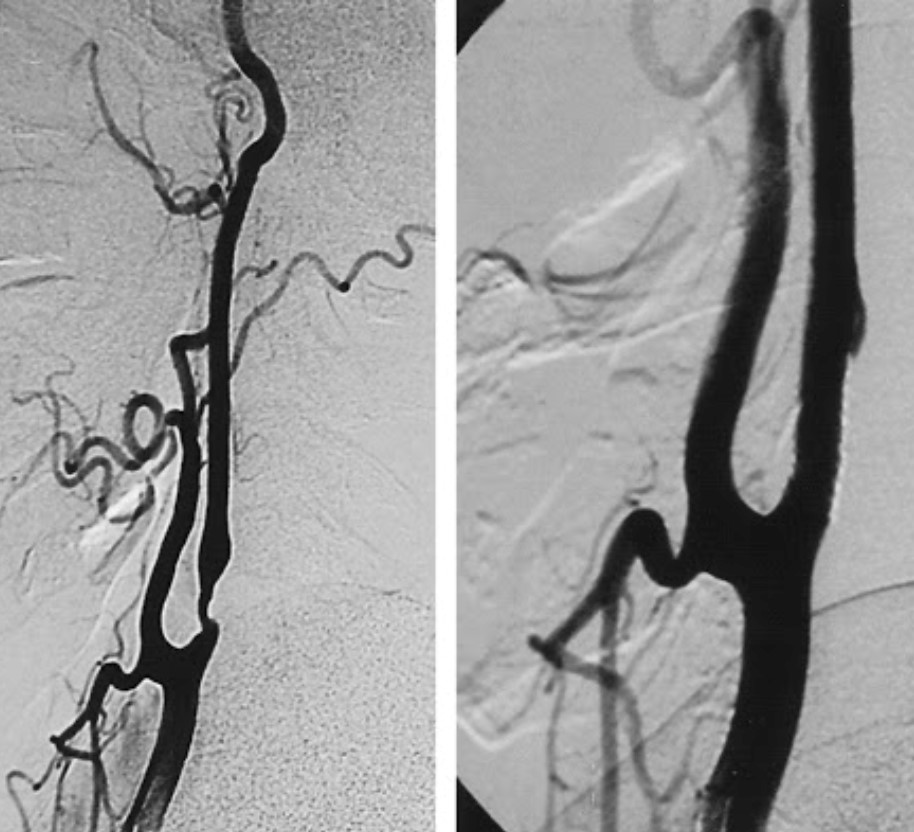
Carotid artery stenting (CAS, also referred to as carotid artery angioplasty with stenting) is a minimally invasive treatment option for effectively managing carotid artery stenosis and preventing stroke. It is a non-surgical treatment in which catheters (thin hollow tubes) are used to place a stent (a metal mesh tube) in the affected artery to ensure the passage stays clear, thus restoring blood flow.
While some patients with carotid artery stenosis have no symptoms, the condition can lead to the formation of blood clots (thrombosis), mini-strokes (which are similar to strokes but only last a few minutes) and strokes (where the artery supplying blood to the brain is blocked). The CAS procedure is a possible alternative for patients for whom the traditional surgical option, carotid endarterectomy (CEA), may not be suitable.