
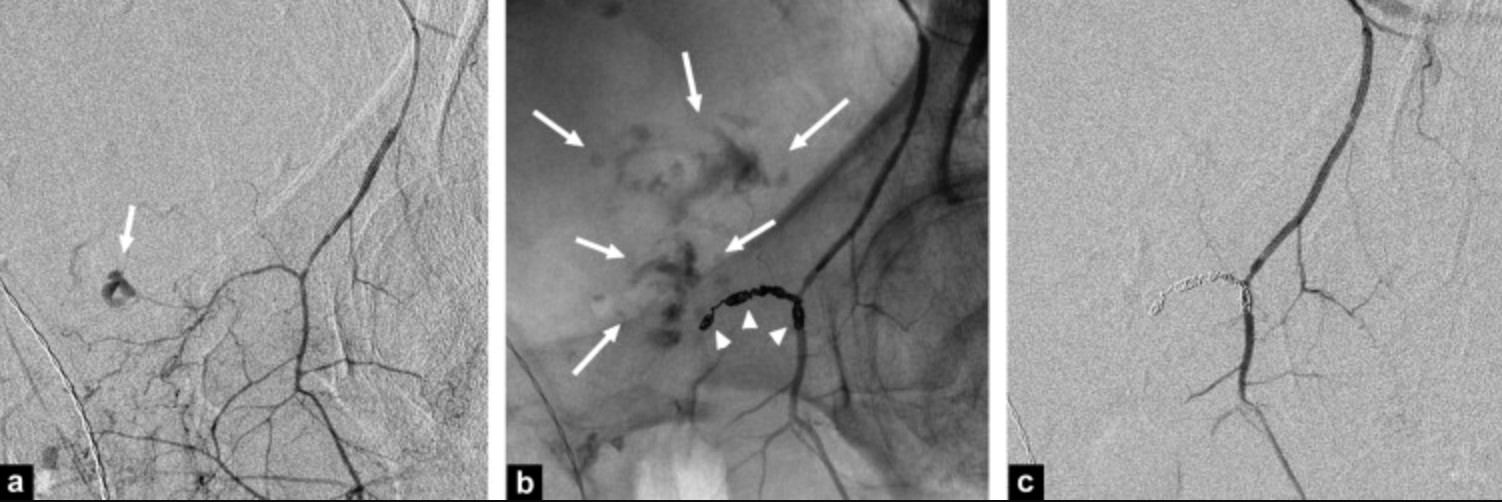
The procedure aims to stop blood flowing into the haemorrhaging vessels whilst preserving blood flow to the surrounding vessels and organs.
The interventional radiologist will insert a 2-3 mm tube into a blood vessel in your groin and will guide the tube under image guidance to the bleeding vessel or vessels. They will then insert small resin particles (microparticles), glue or small metal spirals (coils) into the bleeding vessel or vessels. This causes the vessel or vessels to become blocked and so stops the bleeding.
There are two main reasons why it is important to treat post-traumatic bleeding. If too much blood is lost, the patient may go into shock, which is life-threatening. It is also possible for large bruises to form, which could compress other organs or muscles.