IMAGE GUIDED BIOPSY
WHAT IS IMAGE-GUIDED PERCUTANEOUS DRAINAGE?
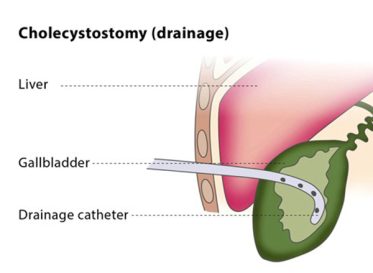
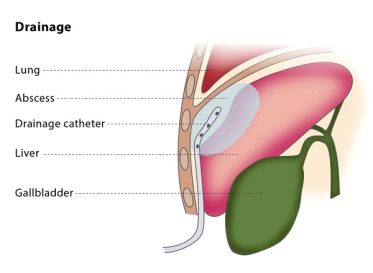
Image-guided percutaneous drainage involves using a catheter (a thin tube) to drain an abscess or a collection of fluid or air under image guidance. The interventional radiologist will insert a flexible catheter through a small cut in your skin and will guide the catheter to the collection of fluid or air. The fluid or air will then be collected in a drainage bag.
Drainage catheters are available in a variety of sizes, shapes and types. The interventional radiologist will choose the catheter according to the type of fluid, along with other indications. If you are on any medication that prevents blood clotting, you will stop taking it before the procedure, if possible.
US, FLUOROSCOPIC OR CT GUIDED DRAINAGE OF COLLECTIONS, ABCESS OR FLUID
Percutaneous drainage can be performed as an in-patient or out-patient procedure. The puncture site and your vital signs will be monitored for 4-6 hours. You will experience some mild discomfort around the puncture site in the first few hours after the procedure. The interventional radiologist will periodically follow up using imaging to confirm that the abscess or fluid collection has gone.
Why perform it?
Percutaneous drainage is recommended to treat fluid or air collections which produce symptoms (such as pneumothorax, which is the collection of air or gas in the gap between the chest wall and the lungs). It can also treat recurrent fluid collections by using medication and is a minimally invasive method of draining abscesses. The percutaneous drainage procedure cures infected fluid/air collections in over 80% of patients, though failure occurs in 5-10% of patients
Benefits of IR guided procedures
71. Rapid relief from symptoms.
72. The imaging techniques allow accurate diagnosis and treatment using cutting-edge equipment. Diagnosis is reconfirmed during procedure.
73. Minimally invasive procedures are performed through a small hole in the skin, minimising the patient’s discomfort and recovery time. There won’t be any scar.
74. Most procedures can be performed on an outpatient basis or require only a short hospital stay. As interventional procedures tend to require only local anaesthesia, hospital stays are very short, with patients frequently going home the day the procedure is performed.
75. Patients who undergo IR procedures experience less pain during and after the procedure than patients undergoing surgical procedures. Post-procedural care is provided, along with follow-up imaging to confirm if the treatment has been successful.
76. Minimal damage to surrounding vital anatomical structures with no significant structural weakness.
77. No or negligible blood loss. No requirement of blood transfusion.
78. Return to work and other normal activities usually within the first few days after the procedure.
79. Low risk compared to surgery. The techniques can be used in very sick patients who are unfit for surgery.
80. Overall procedure is less expensive than surgery or other alternatives.
How will you prepare for procedure:
Procedure will be done as a day case procedure, only rarely would you need to stay overnight.
• You will have had some blood tests performed before the procedure to check that you do not have an increased risk of bleeding.
• You are asked not to eat for 4 hours prior to the procedure. You may drink a little water.
• You will need someone to drive you home and to look after you for 24 hours.
• You should be prepared to stay overnight if necessary.
• If you have any allergies or you have previously reacted to intravenous contrast medium, you must let the doctor know. Intravenous contrast medium is the injection we give you during some scans.
• If you are diabetic, please contact IR coordinator at 0328 0177770 for further information
• If you normally take any medication to thin your blood (anticoagulation or antiplatelet drugs) such as: warfarin / clopidogrel / aspirin, dabigatran (Pradaxa) / rivaroxiban (Xarelto) / Apixaban (Eliquis) / phendione / acenocoumarol – then these may need to be stopped or altered. Please contact the contact IR coordinator at 0328 0177770 for further information
How long will it take?
Every case is different, and it is difficult to predict exact time it will take. Procedure will be carried out in image guidance and roughly takes an hour or so.
What Happens afterwards?
You will be observed in a post operative facility for 2 to 4 hrs and if all observations are satisfactory, you will be discharged home the same day. It is natural to feel tired after the procedure and a light bed rest for a couple of days is recommended.