

The interventional radiologist will insert a 3 mm plastic tube (called a sheath) into the base of your skull or your groin. They will then guide the sheath near to the stenosis or blockage in the affected vein. The vein will be reopened using a metallic wire and a selective catheter using a technique called recanalisation, after which the vena cava stent is placed.
The stent is self-expanding and acts like a skeleton to keep the vena cava open. If your vena cava is completely blocked due to a tumour, your interventional radiologist may also insert a tiny balloon which inflates once it is in the vein before and after inserting the stent. You will need to take medication that prevents blood clotting for 1-2 weeks following the procedure; the exact time period depends on the type of stent used and your clinical situation.
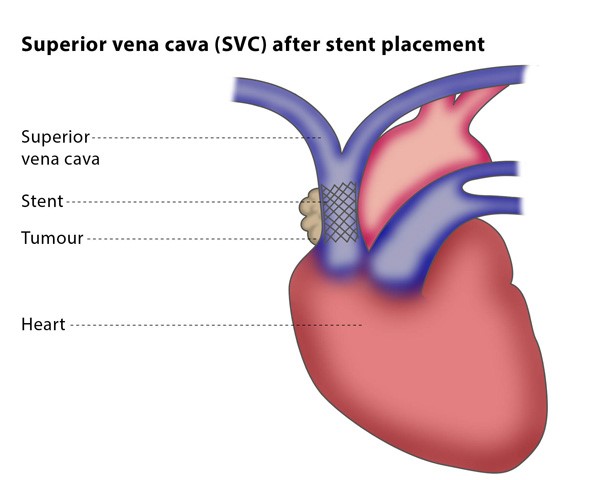
The aim of vena cava stenting is to manage symptoms caused by an obstruction of the blood flow in the vein, which is much more common in the SVC than in the IVC.
The main symptom of an obstructed blood flow in the vena cava is shortness of breath, followed by swelling of the face, neck or arms, a headache, a cough and enlargement of the veins in the neck, chest and arms. You may experience other symptoms but they are rare.
Your symptoms should stop within 48 hours of the stent placement.