
Haemodialysis access maintenance procedures are performed on an out-patient basis and use fluoroscopic guidance. Your vital signs will be monitored during the procedure.
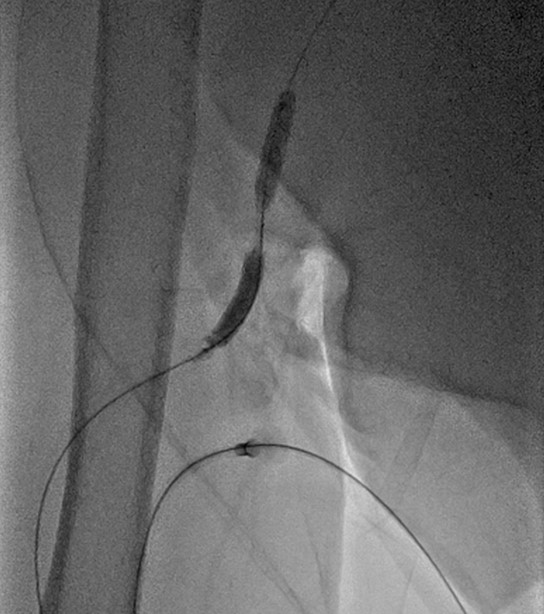
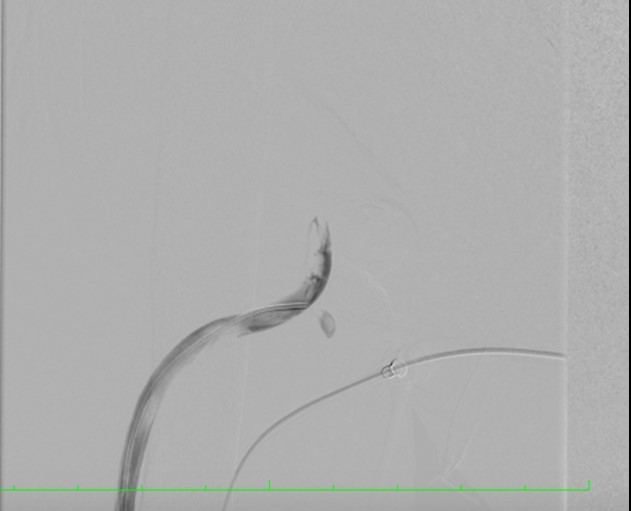
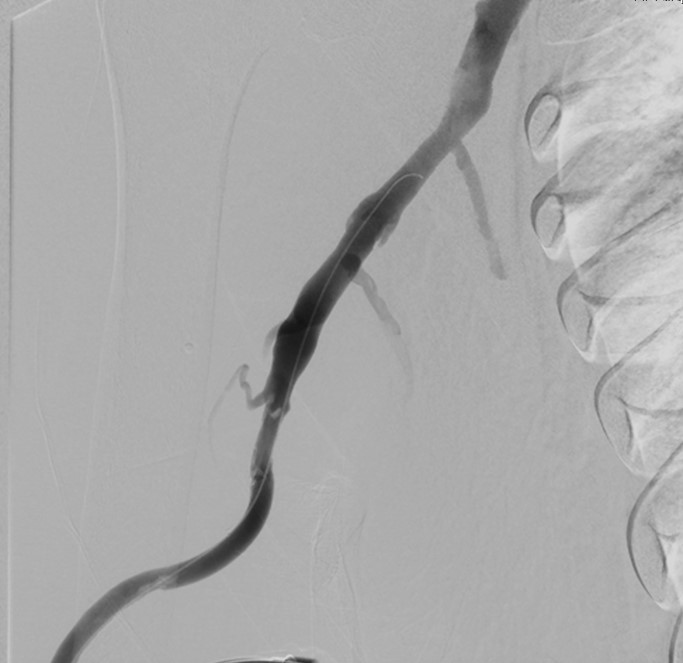
You will undergo local anaesthesia. The interventional radiologist will cut a small incision in your skin, and will then insert a catheter and a guidewire into your AV fistula or synthetic graft. If there is a blood clot present, the interventional radiologist can remove it by performing a procedure called a thrombectomy.
In order to accurately diagnose the location and severity of any narrowing in the AV fistula, the interventional radiologist will inject a contrast material (dye) into the fistula, the inflow artery and the outflow vein, and will perform an angiography on the area. The interventional radiologist will then insert a tiny inflatable balloon into the narrowed area using a guidewire. As the balloon expands, it gently widens the vessel wall and restores the vessel’s diameter. In some cases, the interventional radiologist will place a stent (a specially designed metal tube) in the vessel to support the vessel walls and keep them open.
If there is a blockage or narrowing in an AV fistula or synthetic graft, it will not be possible for blood to flow to the haemodialysis machine. The development of percutaneous maintenance techniques has prolonged the life of AV fistulas and grafts. As a result, haemodialysis access maintenance procedures reduce the need for temporary central catheters and help to preserve the vessels in the kidney.