
Balloon-occluded retrograde transvenous obliteration (BRTO)
What is BRTO?
Portal hypertension refers to high blood pressure in the liver. One of the major possible complications of portal hypertension is gastric variceal bleeding. Varices are dilated vessels which may rupture, causing variceal bleeding. Gastric variceal bleeding describes the bleeding that occurs when dilated vessels in the stomach rupture and, is associated with high morbidity and mortality rates.
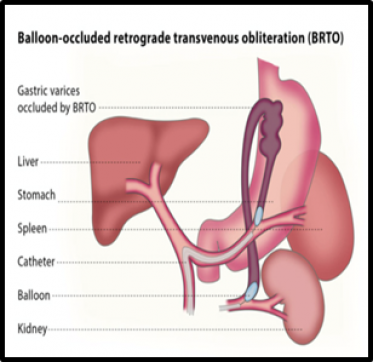
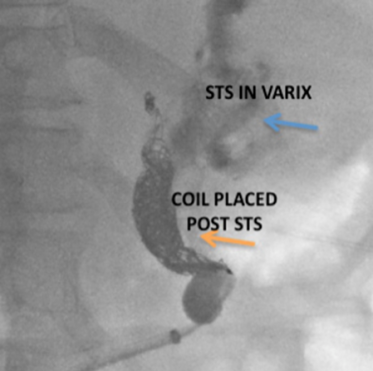
BRTO is a minimally invasive technique that is used to treat gastric variceal bleeding. The procedure involves blocking the dilated vessels, reducing the risk of rupture. It can be used in addition to or as an alternative to TIPS, which is the primary treatment for gastric varices. TIPS aims to relieve the pressure on the dilated vessels by creating new connections between blood vessels in the liver using a shunt.
BALLOON-OCCLUDED RETROGRADE TRANSVENOUS OBLITERATION (BRTO)

Why perform it?
You may be advised to undergo this procedure if you are at risk of or already have gastric variceal bleeding and hepatic encephalopathy as well as a gastrorenal shunt. Hepatic encephalopathy refers to the worsening of brain function that is caused by a damaged liver.
BTRO is a less invasive and more effective way to manage varices than shunt surgery or TIPS. TIPS may not always cause the disappearance of gastric varices, while BRTO can in most cases completely destroy these vessels.
BRTO has tended to be used to prevent gastric variceal bleeding. It is also an effective therapy for sclerosis (narrowing) of new portosystemic shunts with the additional complication of hepatic encephalopathy. One of the greatest advantages of BRTO is its preservation of liver function. Moreover, the increase of blood flow in BRTO can also improve liver function in cases where the patient has scarring of the liver.
Benefits of IR guided procedures
41. Rapid relief from symptoms.
42. The imaging techniques allow accurate diagnosis and treatment using cutting-edge equipment. Diagnosis is reconfirmed during procedure.
43. Minimally invasive procedures are performed through a small hole in the skin, minimising the patient’s discomfort and recovery time. There won’t be any scar.
44. Most procedures can be performed on an outpatient basis or require only a short hospital stay. As interventional procedures tend to require only local anaesthesia, hospital stays are very short, with patients frequently going home the day the procedure is performed.
45. Patients who undergo IR procedures experience less pain during and after the procedure than patients undergoing surgical procedures. Post-procedural care is provided, along with follow-up imaging to confirm if the treatment has been successful.
46. Minimal damage to surrounding vital anatomical structures with no significant structural weakness.
47. No or negligible blood loss. No requirement of blood transfusion.
48. Return to work and other normal activities usually within the first few days after the procedure.
49. Low risk compared to surgery. The techniques can be used in very sick patients who are unfit for surgery.
50. Overall procedure is less expensive than surgery or other alternatives.
How will you prepare for procedure:
You will be requiring an overnight admission in the hospital.
• You will have had some blood tests performed before the procedure to check that you do not have an increased risk of bleeding.
• You are asked not to eat for 4-6 hours prior to the procedure. You may drink a little water.
• You will need someone to look after you for 24 hours and drive you home on discharge.
• If you have any allergies or you have previously reacted to intravenous contrast medium, you must let the doctor know. Intravenous contrast medium is the injection we give you during some scans.
• If you are diabetic, please contact IR coordinator at 0328 0177770 for further information
• If you normally take any medication to thin your blood (anticoagulation or antiplatelet drugs) such as: warfarin / clopidogrel / aspirin, dabigatran (Pradaxa) / rivaroxiban (Xarelto) / Apixaban (Eliquis) / phendione / acenocoumarol – then these may need to be stopped or altered. Please contact the contact IR coordinator at 0328 0177770 for further information