
An aneurysm is a localised bulge in an artery caused by weakening, which may be a result of atherosclerosis or an infection, or injury of the arterial wall. A peripheral aneurysm is an aneurysm which is not located in the aorta. They usually occur in the popliteal artery in your leg, though may also occur in other areas.
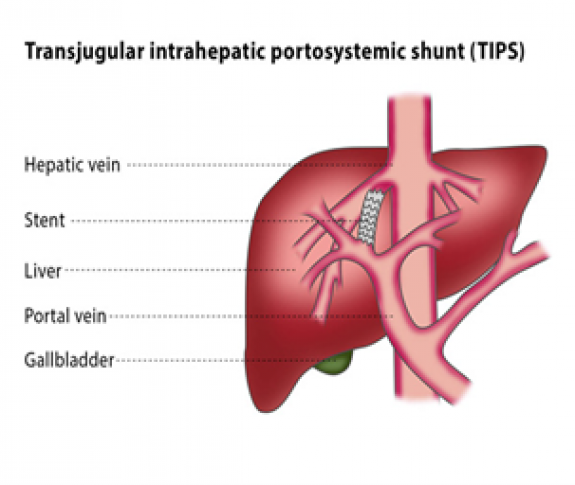
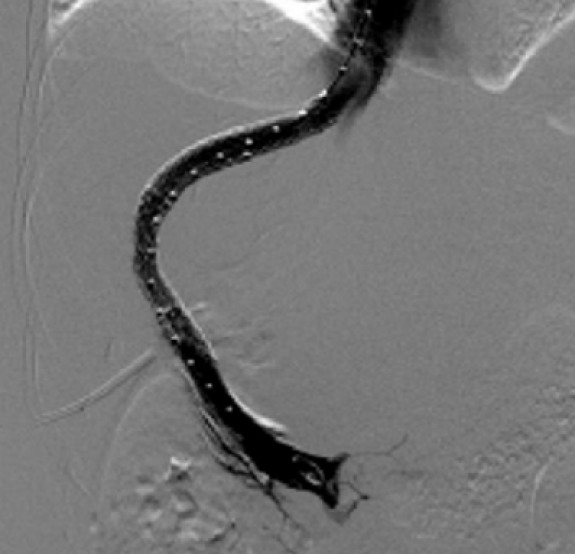
The TIPS procedure is usually performed in patients with liver cirrhosis. If you have this condition, your normal blood flow through the liver is blocked by scar tissue within the liver, which increases the pressure in your portal vein.
The increased pressure in your portal vein makes thin veins in your gullet or stomach become abnormally enlarged and so at risk of bleeding. Another symptom of liver cirrhosis is an abnormal collection of fluid (ascites) in the abdominal cavity.
You may be advised to undergo TIPS if you have varices which bleed acutely or recurrently and have not responded to other treatments.
Once the interventional radiologist has placed the shunt, the pressure in the portal vein decreases, protecting the area from bleeding and reducing the ascites.
Because a liver suffering from cirrhosis is shrunken and the liver tissue can be very hard, it is possible to puncture the outside of the liver. This can cause bleeding which requires further treatment.
Another risk is that after the TIPS procedure ammonia from the intestine might bypass the liver and be delivered to the brain, which may result in a condition called hepatic encephalopathy, the symptoms of which range from mild (alterations in thinking) to severe (confusion and coma).
Due to the shunt, there is an increased amount of blood flowing directly to the heart, which can cause heart failure. If you experience this, your doctor will decrease or disrupt the blood flow through the TIPS.